It’s one of the most common questions adult learner drivers ask before booking their first lesson: how long is this actually going to take?
The answer is more nuanced than most people expect — and more encouraging than many adults fear. Learning to drive as an adult is not only entirely achievable, but it often goes more smoothly than it did for teenage learners. Adults tend to be more focused, more patient, and more self-aware behind the wheel. What adults typically lack is confidence — and that’s exactly what a structured lesson programme is designed to build.
This guide walks through a realistic timeline for adult learner drivers in Victoria, the factors that affect how quickly you progress, and how to make the most of every hour you spend behind the wheel.
The Legal Minimum Timeline in Victoria
Before discussing how long learning takes from a skill perspective, it’s worth understanding the legal framework in Victoria that shapes the minimum timeline regardless of your ability.
To progress from a learner permit to a probationary (P-plate) licence in Victoria, you must complete at least 120 hours of supervised driving, including a minimum of 10 hours at night. You must also hold your learner permit for at least 12 months before you can sit the driving test — unless you complete the Safer Driving Course, which can reduce this to 10 months.
This means that even if you become a proficient driver relatively quickly in terms of skill, you cannot take your licence test until those time and hours requirements are met. Understanding why 120 logbook hours are required is important for managing your expectations from the start.
For adults who have previously held a licence — whether an expired Australian licence or an overseas licence they want to convert — different pathways apply. If you’re converting an overseas licence to a Victorian one, the process and timeline are different, and our guide on converting an overseas licence to a Victorian licence covers this in detail. Monika’s also offers a dedicated overseas licence conversion service for drivers going through this process.
How Many Professional Lessons Does an Adult Typically Need?
The honest answer is: it varies significantly, and anyone who gives you a precise number without knowing anything about you is guessing.
That said, research and driving school experience consistently show that most adult learner drivers who take structured professional lessons require between 15 and 30 hours of professional instruction to reach a competent standard for the driving test, spread across their 120 hours of total supervised driving.
Some adults reach test-ready standard closer to 10 to 15 lessons. Others need 30 or more. The variables that determine where on that spectrum you fall include your prior experience (if any), how frequently you practise between lessons, the type of driving you need to master (city traffic, highways, night driving), and how quickly you build confidence behind the wheel.
For a deeper look at this question, our blog on how many lessons you need to pass the test in Victoria breaks it down further, including what instructors look for when assessing readiness.
Factors That Affect How Quickly Adults Learn to Drive
Understanding what affects your learning speed helps you make smarter decisions about how to structure your lessons and supervised practice.
1. How Often You Practise
This is the single biggest variable. Learning to drive is a motor skill — like learning to swim or ride a bike. Frequency matters enormously. An adult who has one professional lesson per week and practises twice with a supervising driver between lessons will progress two to three times faster than someone who only has lessons and does no practice in between.
If you’re wondering whether one driving lesson a week is enough, the short answer is that it depends on what you do between lessons. Lessons without practice between them tend to result in skills regressing slightly each week, requiring more time to rebuild rather than simply advancing. Aim for at least two to three practice sessions per week with your supervising driver to maximise the value of each professional lesson.
2. Anxiety and Confidence Levels
Driving anxiety is more common in adult learners than most people realise, and it has a real impact on learning speed. Adults who approach driving with significant anxiety often need more lessons than confident learners — not because they’re less capable, but because anxiety interferes with the ability to process and apply information while driving.
The good news is that anxiety almost always reduces with structured, patient instruction. If this is a concern for you, nervous driver lessons specifically designed for anxious adult learners provide a gentler, more confidence-focused progression. There’s also useful advice in our blog on driving tips for nervous drivers and overcoming driving anxiety before your test.
3. Manual vs Automatic
If you’re learning in an automatic car, you have one less major skill to develop — gear changes, clutch control, and stall prevention are all removed from the equation. Most adult learners who want to get their licence efficiently choose to start in an automatic, as it allows them to focus on road awareness, observation, and decision-making without the added complexity of a manual transmission.
If you do want to learn manually, expect to add time — typically several additional lessons early in the process before gear changes become fluid enough to handle alongside everything else. Our blog on manual vs automatic explores the trade-offs, and we offer both manual lessons and automatic lessons depending on your preference and goals.
4. The Variety of Conditions You’ve Practised In
One of the most common reasons adult learners aren’t ready for their test when they think they are is insufficient variety in their practice driving. The VicRoads driving test assesses your ability to handle a wide range of real traffic situations — not just quiet residential streets.
Adults who have only practised near home in familiar, low-traffic conditions often struggle with the highway sections, roundabouts, and complex intersections that appear on most test routes. Structuring your supervised hours to include highway driving, city driving, and night driving — not just local street driving — dramatically improves both your skills and your readiness.
Night hours are particularly worth starting early. Many learners leave all ten required night hours until the end of their logbook, which creates time pressure. Starting night driving earlier gives you more time to build comfort in lower-visibility conditions, and is something night driving lessons can help structure properly. Our blog on why night driving logbook hours are important explains why these hours matter beyond just ticking a box.
5. Whether You Take an Intensive or Spread-Out Approach
Some adult learners — particularly those with upcoming employment that requires a licence, or those who have been delaying getting their licence for years — benefit from an intensive driving course that concentrates lessons over a shorter period. Intensive learning can accelerate skill development significantly, particularly in the early stages when foundational habits are forming.
Others learn better with lessons spread out over time, allowing skills to consolidate between sessions. Weekend driving lessons are a popular option for working adults who can’t commit to weekday lesson times.
A Realistic Timeline for an Adult Learner in Victoria
Here is a practical timeline that reflects what most adult learners can expect, assuming regular lessons and consistent supervised practice between them.
Months 1–2: Building foundational skills. Your first driving lesson covers the absolute basics — adjusting the vehicle, understanding controls, starting and stopping smoothly, steering accurately, and navigating quiet roads. By the end of this phase, most adults are comfortable driving at low speeds in light traffic with guidance. You’ll also begin accumulating logbook hours with your supervising driver.
Months 2–5: Developing competency in varied conditions. This is the bulk of the learning journey. You’ll progress from quiet streets to busier roads, roundabouts, intersections with traffic lights, highways, and eventually night driving. This is also when parallel parking, three-point turns, and other manoeuvres are introduced and practised. Our resource on how to ace three manoeuvres is worth reading during this phase.
Months 5–10: Consolidation and test preparation. As you approach the 80–100 hour logbook mark, lessons shift toward test preparation and consistency — performing all skills reliably, not just occasionally. This is when VicRoads test preparation lessons and mock tests become most valuable. Our mock driving test checklist is a useful tool to help you self-assess during this phase.
Month 10–12: Test readiness. If you’ve completed the Safer Driving Course, you may be eligible to test at 10 months. Otherwise, the 12-month mark is when most learners sit their test. At this stage, your instructor will help you identify whether you’re genuinely ready or need additional consolidation. Our blog on 5 signs you are ready for your driving test provides an honest checklist to assess your readiness before booking.
What About Adults Who Are Completely New to Driving?
Adults who have never sat behind the wheel before often worry that they’ve left it too late or that learning as an adult is harder than learning as a teenager. Neither is true.
Adults bring genuine advantages to the learning process. They tend to be more focused during lessons, more willing to ask questions, more aware of the consequences of mistakes, and better at applying feedback. The main disadvantages — reduced reflex speed compared to teenagers, and sometimes more established anxiety patterns — are manageable with the right instruction.
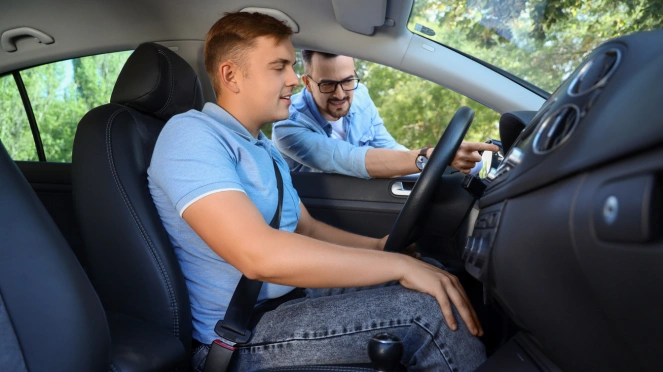
Adult driving lessons are specifically designed to account for how adults learn differently from teenagers. The pace, the communication style, and the skill progression are adapted to adult learning patterns rather than applying a one-size-fits-all approach.
If you’re starting completely from scratch, beginner and intermediate lessons provide a structured pathway from zero experience through to confident driving, with each lesson building directly on the last.
How to Get Your Learner Permit First?
Before any of this begins, you need a learner’s permit. To get your L plates in Victoria, you must pass the Learner Permit Test (also called the DKT — Driver Knowledge Test) at a VicRoads service centre. The test covers road rules, road signs, and safe driving behaviour.
Our blog on tips for passing the DKT covers preparation strategies, and the learner permit test page has more detail on what’s involved. If you haven’t got your L plates yet, you can also practise with the practice learner permit test on the website before heading in to sit the real one.
Our blog on how to get your learner permit walks through the full process step by step if you’re unsure where to start.
Making the Most of Every Hour in Your Logbook
The 120 hours in your logbook are not just a bureaucratic requirement — they’re an opportunity to build real-world driving experience in a huge variety of conditions. But only if you use them strategically.
Many learners fill their logbook hours on the same roads, at the same times of day, in the same comfortable conditions. This creates a false sense of readiness. You need hours in heavy traffic, hours at night, hours on the freeway, hours in rain, hours in unfamiliar suburbs. The logbook is most valuable when it genuinely reflects varied experience rather than 120 laps of the same quiet street.
If you’re managing your logbook digitally, the digital learner logbook page explains how the system works and how to record hours correctly. Our blog on whether to record logbook hours on paper or digitally covers the pros and cons of each approach.
It’s also worth knowing what to do if something goes wrong with your logbook — our blog on what to do if you lose your logbook covers this scenario.
When You’re Ready: What the Driving Test Involves
When the 12 months (or 10 months with the Safer Driving Course) are up, and your logbook is complete, you’ll book your practical driving test through VicRoads. The test typically lasts around 20 to 30 minutes and involves driving in real traffic while a VicRoads assessor observes.
Understanding exactly what is in the P’s driving test in Victoria removes a lot of anxiety from the process. Knowing what you’ll be assessed on means you and your instructor can specifically prepare for those elements in your final lessons.
The most common reasons people fail their driving test are not dramatic errors — they’re small, consistent mistakes that accumulate. Our blog on top 5 reasons to fail the driving test and instant fails on the Victoria driving test are worth reading well before you sit your test, so you can focus your final preparation on the right things.
If you want dedicated preparation in the weeks before your test, our drive test lessons and L to P driving lessons packages are designed specifically for this final phase. And if you find yourself needing a test sooner than planned, our urgent late notice drive test service can help.
Don’t Forget: Failing Is Not the End
If your first attempt at the driving test doesn’t go to plan, it’s not a catastrophe. A significant proportion of learner drivers — including highly capable ones — don’t pass on their first attempt. The experience of sitting the test is itself valuable, and many learners find that the specific feedback from a failed attempt is more useful than weeks of general preparation.
If you’ve already failed your test, our blog on what to do if you fail your driving test walks through the practical next steps and how to reframe the experience constructively. A few targeted lessons addressing the specific areas the assessor flagged will often be all that’s needed before the next attempt.
For Adults Returning to Driving After a Long Break
A different category of adult learner is the person who once had a licence or drove regularly but hasn’t been behind the wheel for years. Whether due to living in a city with good public transport, a medical break, an overseas period, or simply letting a licence lapse, returning to driving after years away requires a different approach than learning from scratch.
A refresher driving course is the right starting point for these drivers. Rather than starting from absolute basics, a refresher identifies which skills are still present (most foundational ones are retained) and which have degraded or need updating — particularly given changes to road rules and technology since you last drove regularly.
Our blog on what a refresher driving course involves gives a clear picture of what to expect, how many lessons returning drivers typically need, and how to judge when you’re ready to drive independently again.
Conclusion
The legal minimum timeline for an adult learner in Victoria is 12 months from getting your L plates, with 120 supervised hours (10 at night) required before your practical test. The Safer Driving Course can reduce this to 10 months.
In terms of skill development, most adult learners need between 15 and 30 professional lessons alongside their supervised practice hours to reach test-ready standard.
Frequency of practice between lessons is the biggest single factor affecting how quickly you progress. Regular, varied practice in different conditions dramatically accelerates skill development.
Adults often learn more efficiently than teenagers when given patient, well-structured instruction — anxiety and confidence are the main barriers, not ability.
The right lesson structure depends on your starting point, your goals, and your timeline — whether that means beginner lessons, an intensive course, refresher training, or dedicated test preparation.